Posts

Showing posts with the label Reading

Reading Notes: Hans Christian Andersen Part B

Image
This story is part of the Andersen Fairy Tales unit . Story source: Fairy Tales and Stories by Hans Christian Andersen , translated by H. P. Paull (1872). In this part, I have read the story about the little mermaid. I am familiar with the plots since I have read it many times when I was a child. When I read the English version, I found that it is so important for me now. Let's see only one sentence. "She could see the moon and stars shining faintly, but through the water, they looked larger than they do to our eyes." In this sentence, it uses the word "faintly" to describe the light of the moon and stars which is so vivid and elegant. I believe that sometimes a good adverb or an excellent adjective could endow the sentence with a special atmosphere. This atmosphere could help readers to imagine some beautiful scenes in their minds. That is also the key to make a story attractive and absorbing.  Besides, I feel so sad about the ending of the story. Little merma...

Reading Notes: Hans Christian Andersen Part A

Image
This story is part of the Andersen Fairy Tales unit . Story source: Fairy Tales and Stories by Hans Christian Andersen , translated by H. P. Paull (1872). It is so exciting that I got a chance to read Andersen Fairy Tales in this class! I had read the Chinese version of the storybook when I was a child. All stories in this book are impressive and attractive.  For me, The Princess and the Pea would be one of the most preferred stories. The plot setting for this story is elegant. The author tries to describe a princess in that. However, there is no depiction of the princess's appearance or emotion, but only the sensitivity of her body. She could even feel the existence of the pea which is placed under twenty mattresses. At this point, all readers would accept that woman would be a princess cause she is such unique. I could also use this strategy when I write my own story. If I want to describe a character or a place, writing each aspect that is related to that person or place ...

Reading Notes: Alaskan Legends Part B

Image
This story is part of the  Alaskan Legends unit . Story source:  Myths and Legends of Alaska , edited by Katharine Berry Judson (1911). In this part, different stories do not have many connections with each other. For example, the first story, it tells the origin of the Chilkat Blanket while the second tells the story about the origin of women. In the former part, stories are coherent. Two different writing strategies exist in one storybook. I think both of them would be a good strategy to build my own project.  For now, I prefer the second strategy cause I want readers to find some relationships between different stories when they read. Also, I do not think that those relationships should only be some simple factors such as characters appear in one place. But, different characters with various emotions and personalities may confront some similar situations. They would react diversely, and their reactions would lead to disparate outcomes.  Besides, I enjoy the plots ...

Reading Notes: Alaskan Legends Part A

Image
This story is part of the Alaskan Legends unit . Story source: Myths and Legends of Alaska , edited by Katharine Berry Judson (1911). This part of the story told us a story about Raven created the world. It is very interesting since people see the Raven played a role just like God in the Alaskan Legends. Raven created people, other animals, and the world.  Although Raven had a similar power with God, differences still existed, Raven did not punish any people, he taught and instructed. In my view, this is definitely a part of Raven's charming. As the man who created the world, he did not show emotions such as anger or cold-blooded, but he showed patience and concern. This is very important for all of the legends I think, such a character could even influence the culture internally. If we assume that Raven is a spiritual leader, he would definitely transmit several positive values to people who live in the Alaskan.  We always could find that myths would be connected to many rel...

Reading Notes: Blackfeet Indian Stories Part B

Image
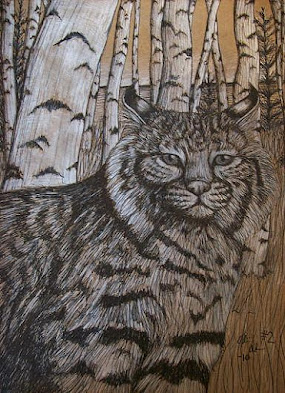
This story is part of the Blackfoot unit . Story source: Blackfeet Indian Stories by George Bird Grinnell (1915). At this part, the most excellent story would be the  Bobcat and Birch Tree . In this part, several things have grabbed my attention. When the man met the prairie-dogs, when he go find the bobcat, and finally, when he was saved by a Birch tree, all those plots are funny and interesting for me. I think this is the reason that I could enjoy reading the story. At the beginning of this semester, I said that I would like to find the reason why mythologies and folk myths could exist for hundreds, even thousands of years. To some extent, I think this story could explain this question to us. For instance, it connects the story itself to reality. The man beat the bobcats' face and made that flat. The author mentioned, "It is for this reason that the lynxes to-day look like that". Next, when the man was saved by the Birch tree, he gashed the tree's bark and thank f...

Reading Notes: Blackfeet Indian Stories Part A

Image
This story is part of the Blackfoot unit . Story source: Blackfeet Indian Stories by George Bird Grinnell (1915). I really enjoy the story - The Wolf Man in this part. This little story is full of fantastic and impressive plots. Although there are no elegant or elaborate exist in this folklore, it still shows us some valuable contentions. The man's two wives tried him, and they tried to kill him. The man was saved by wolves, then the two women got punished.  Most importantly, the story reflects several profound points. First, wives chose to kill the men and get freedom. Also, at the beginning of the story, the author has mentioned that the two women are not kind people. I think this plot could be connected to reality, some people would choose to realize their desire by betraying the people around them. At the end of the story, the author put a classic good ending. Those two women had been punished, although such an end may not happen in the real world.  Second, the man had be...

Reading Notes: Japanese Fairy Tales (Ozaki) Part B

Image
This story is part of the Japanese Fairy Tales (Ozaki) unit . Story source: Japanese Fairy Tales by Yei Theodora Ozaki (1908). Today, I have been read the story -  The Ogre of Rashomon . I am marveled at the protagonist's brave and power and the wonderful plot. For the plot, Watanabe could not kill the ogre when he first met it. He tried but failed. Even at the end of the story, he still could not kill the ogre. This plot set gives me an inspiration that I do not need to eliminate the evil in my own storybook. Nevertheless, I still could get a happy ending. Just like the story, the ogre escapes from Wantanabe's house, and it would never trouble Kyoto again.  Next, descriptions of the character's actions in this story are also excellent. For instance, "he seized his sword, drew it out of its sheath in a flash, and tried to cut the ogre down". This sentence is so vivid and immersive since the detailed depiction of the behavior of Watanabe. After reading this, I re...

Reading Notes: Japanese Fairy Tales (Ozaki) Part A

Image
This story is part of the Japanese Fairy Tales (Ozaki) unit . Story source: Japanese Fairy Tales by Yei Theodora Ozaki (1908). This is a very interesting and impressive story. Actually, this is the first time that I read the Japanese myth. The story tells that a brave warrior Hidesato helps the Drago King of the lake to kill his enemy - a huge centipede. I was shocked by the story's depiction of different scenes. For example, when Hidesato first met the dragon, the story said, "Its body was so big that it looked like the trunk of a large pine tree, and it took up the whole width of the bridge. One of its huge claws rested on the parapet of one side of the bridge, while its tail lay right against the other. The monster seemed to be asleep, and as it breathed, fire and smoke came out of its nostrils." I would say that this paragraph gives me many inspirations about how to describe a specific object. First, the author compares the dragon's body to a pine tree. This proc...

Reading Notes: The Monkey King Sun Wu Kung Part B

Image
This story is part of  The Monkey King unit . "The Ape Sun Wu Kung" in The Chinese Fairy Book , ed. by R. Wilhelm and translated by Frederick H. Martens (1921). In this part, I want to talk about some moral or ethical issues. At the beginning of this story, the lord of heaven blames Wu Kung's "wild, unmannerly behavior". Then, the following plots show his power: he could choose to punish Wu Kung or do not punish him without a doubt. The gods who live in heaven, they do not follow specific laws or rules, but they just think Wu Kung did wrong things. This is a traditional role of any kind of gods in mythology. For example, Zeus, the god in European mythology, also has this kind of power. I think they both like to force their value into other creatures, or other people in the story.  In this part, the only reason for the lord of heaven who could tame Wu Kung is because he is related to Buddha. Since the existence of Buddha, so they could punish Wu Kung successfull...

Reading Notes: The Monkey King Sun Wu Kung Part A

Image
This story is part of The Monkey King unit .   "The Ape Sun Wu Kung" in The Chinese Fairy Book , ed. by R. Wilhelm and translated by Frederick H. Martens (1921). This part of the story shows us the birth of Sun Wu Kung and his journey. For me, this is a familiar topic, I have already read Sun Wu Kung's story many times when I still in China. In this storybook, the author briefly talked about his experiences, and I gain some new knowledge about Wu Kung. For example, when he leaves the cave in the water-curtain, the author mentioned, "Wind and waves were favorable and he reached Asia". This is a connection between myth and reality. I have never heard about that in the story of the Chinese version. Although it is just one sentence, it is very important I think. When I see that, I realized that there is a relationship between Wu Kung's adventure and reality. So, if I could also use this strategy in my own storybook, the story would be more vivid and impressive. ...

Reading Notes: Arabian Nights Part B

Image
This story is part of the Arabian Nights unit . Story source: The Arabian Nights' Entertainments by Andrew Lang and illustrated by H. J. Ford (1898). I have read Aladdin and the Wonderful Lamp when I was a child. Although this version has some differences with the story that I have read before, I really enjoy reading it. The best part of this story I think is the existence of the wonderful lamp. In my opinion, the main point of the Aladdin story is not propagandizing kindness or peace, but depict a specific situation - what would a poor man do when he gets the god's power? This is also one of the reasons that I enjoy reading this story. In reality, many people would like to own countless wealth and infinite power, even though that is impossible. However, in the story, an unreal world, the author and reader could both imagine that. For a deeper understanding, the goal of the stories could not be an advertisement of positive values, it could also be a medium to realize impossibl...

Reading Notes: Arabian Nights Part A

Image
This story is part of the  Arabian Nights unit . Story source:  The Arabian Nights' Entertainments  by Andrew Lang and illustrated by H. J. Ford (1898). In this part, Scheherazade uses several stories to persuade Sultan Schahriar not to kill any ladies. I really like how this story builds the characters' personalities during some small details. Scheherazade is politic, beautiful, and knowledgeable. She would like to stick to her thoughts even though there are dangers waiting for her. Also, she is brave enough to voluntarily confront the dangers. In terms of Sultan Schahriar, although he is rude and merciless, I realized that he is also rational and sober when I reading the plots about him. For instance, when the grand-vizir said that he agrees to sacrifice her daughter. His performance was surprising and incredible. Besides, he agrees that Scheherazade's request to tell her story. After the first story, he even shows curious about the following stories, which means t...

Reading Notes: Sindbad Part B

Image
This story is part of the Voyages of Sindbad unit . Story source: The Arabian Nights' Entertainments by Andrew Lang and illustrated by H. J. Ford (1898). After I saw the end of the story, I am pretty sure that I would remember many excellent plots for a long period. After I saw all of the stories which are included in the storybook, I found that Sindbad has changed his mind from the beginning to the end of his journey. On the first journey, Sindbad was exciting and cordial. He enjoyed his adventure and he felt afraid rarely. However, in the end, he became a little bit impatient, and his journey is no more interesting for him. All he wants is to stay in his home and have a rest in peace. Also, he has mentioned he would like to spend more time to stay with his family and friends. In my opinion, I think this is a really important and crucial change for the character. With the development of the plot, the character in the story would also get older. Although there is nothing about Sin...

Reading Notes: Sindbad Part A

Image
This story is part of the Voyages of Sindbad unit . Story source: The Arabian Nights' Entertainments by Andrew Lang and illustrated by H. J. Ford (1898). I really enjoy reading the adventure stories of Sindbad. I feel exactly the same as him when he feels weary and boring about his ideal life and decides to go for new navigation. For modern life, traveling would be an alternative way to relieve such a boring feeling.  For the story plots, I realize that they are not like Aesop's Fables which are formed by many concise stories, but specific and vivid. For me, I think these characteristics of plots are very suit for the story since readers would like to imagine some pictures or scenes in their minds when they read these stories. For instance, when Sindbad went to the valley of diamonds, there are some depictions of the size of snakes that live in the valley and the amounts of diamonds. All of these descriptions are very helpful for me to understand and indulge in the plots. Wh...

Reading Notes: Aesop's Fables (Jacobs) Part B

Image
The Fables of Aesop by Joseph Jacobs (1894)     The little stories in Nature and Inanimate Objects would be my favorite at this part. The main characteristics are similar to the earlier part. For now, I would like to talk about those stories from some different aspects.      First, the third-person view would be the most commonly used perspective in this part. It provides the author with a border perspective. The author could use this method to avoid their own bias when they tell the story. For Aesop's Fables, the place where the author expresses his own opinion is at the end of each story. Moreover, the author uses this method to remove the side effect of the third-person view. When we use the third-person view to write a story, it always makes the story hard to build a connection with readers, and it is rigid compared to the other two points of view. However, a concluding sentence could smooth these disadvantages since it shows the author's thoughts directl...

Reading Notes: Aesop's Fables (Jacobs) Part A

Image
The Fables of Aesop by Joseph Jacobs (1894)     My favorite part of this story would be the "Lions". I got some inspiration after reading this part. It is comprised of several little stories, and all those stories use the lion as their main character.     The plots of the Fables of Aesop are concise and terse. Each little story may only have seven to eight sentences, but each sentence would be an important part to push the plot forward. There are no tremendous adjectives that inset in the story or excellent descriptions of different scenes. The author's goal is only to tell the story clearly.       Besides, these little stories constitute an entity. I realized that every single story could represent a different lion. None of the lions in these little stories are the same, but they work together and show the infinite possibilities of fairy tales. For example, in the story  The Lion's Share , the lion is selfish and uncourteous. It would...

Reading Notes: Homer's Odyssey Part B

Image
Homer's Odyssey , translated into English by Tony Kline. (2004).         At this part, several things have attracted my attention. It is very interesting when  Odysseus meat The Ghost of Teiresias. The seer talked about the future and the homecoming journey with Odysseus. His predictions are detailed and complicated. This information is definitely very useful for Odysseus since they could make sure that this brave man gets prepared for the following challenges. After I read this part of the storybook, I found there are a lot of prophets in many different kinds of mythology. The prophet looks like an important factor to the ancient authors when they tried to create their works. In my opinion, the power to predict the future comes from reality. In myths, ancients writers magnified the ability of people in reality in order to create a fantastic world.      I always like to think about why mythologies or folk myths are so impressive? Why they cou...

Reading Notes: Homer's Odyssey Part A

Image
Homer's Odyssey , translated into English by Tony Kline. (2004).       In the part of  Odysseus's adventure in the land of Cyclopes, the story is excellent and full of interesting plots. Although the whole content of the story is not complex, Odysseus and his men came to the island, they explored the island and trapped on the island, the author provides many delicate descriptions in these plots. For example, the author talks about the gifts which are offered by the priest of Apollo guardian god, "He offered me splendid gifts, seven talents of well-wrought gold, and a silver mixing-bowl: and wine, twelve jars in all, sweet unmixed wine, a divine draught." I think the reason for the sentence that could grab my attention is that I could imagine a print in my mind.      Then, I found that the whole story is talked in Odysseus' own perspective. During this way to tell the story, the audience could get a better understanding of the main charac...

Reading Notes: Week 2 Anthology

Image
This story comes from Laos in Southeast Asia. Story source : Laos Folk-Lore by Katherine Neville Fleeson (1899). The Man in the Moon      The plot of this story is concise and succinct. It mainly describes two man's dialogue - a wise man, and a man who was once a blacksmith. The man who was a blacksmith always complains about his identity. He wants to be stone, cutter, sun and moon since he only sees the short-termed benefit. The weakness of the blacksmith is his greed. The wise man realizes his requirements once and once again, and he is weary.      In terms of style, the repetition is used in this story. The author shows the reason why the blacksmith wants to be other things. I think this kind of style also shows the characteristic of the character successfully. It foregrounds the greediness of the blacksmith.            In my opinion, the most difficult part for me is how to start a story. The story begins through intr...

Week 2 Reading Overview

Image
Choose from CLASSICAL and/or BIBLICAL units for Weeks 3 and 4. Week 3: Homer's Odyssey  Week 4: Aesop (Jacobs) Choose from MIDDLE EASTERN and/or INDIAN units for Weeks 5 and 6. Week 5: Ancient Egypt Week 6: Sindbad Choose from ASIAN and/or AFRICAN units for Weeks 7 and 9. [Week 8 is review week.] Week 7: China Week 9: Tibet Choose from NATIVE AMERICAN units for Weeks 10 and 11. Week 10: California/Southwest Week 11: Alaska Choose from BRITISH and/or CELTIC units for Weeks 12 and 13. Week 12: King Arthur Week 13: Nursery Rhymes Choose from EUROPEAN units for Weeks 14 and 15. Week 14: Jacobs Week 15: Crane     I am excited to read and understand most mythologies in this list. I even heard some of them when I was in China such as Odyssey and King Arthur. Also, mythologies always give us a feeling of mystery, and this is definitely another reason for me to explore these excellent stories! Greek and Roma Methodology. Web ...